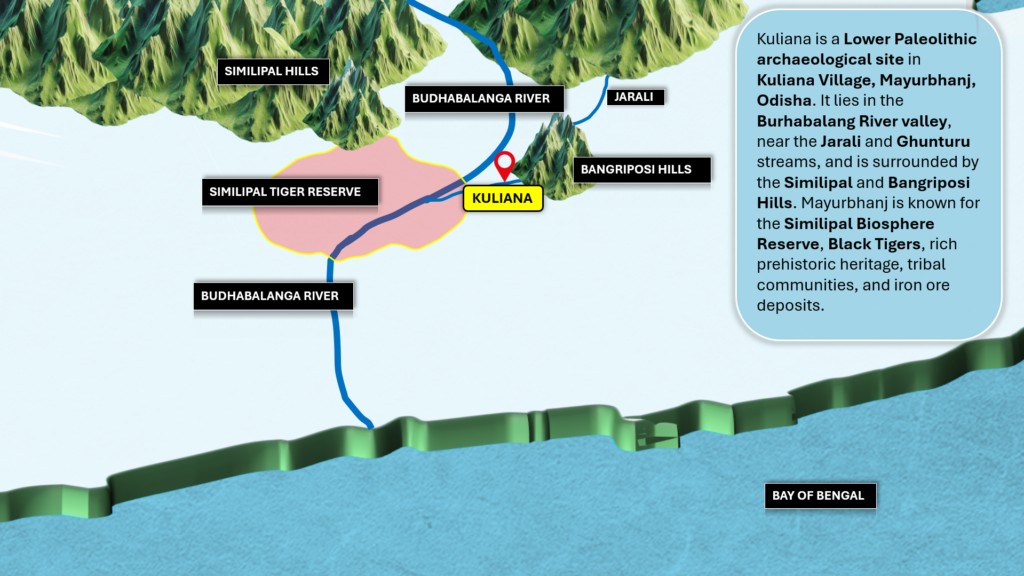
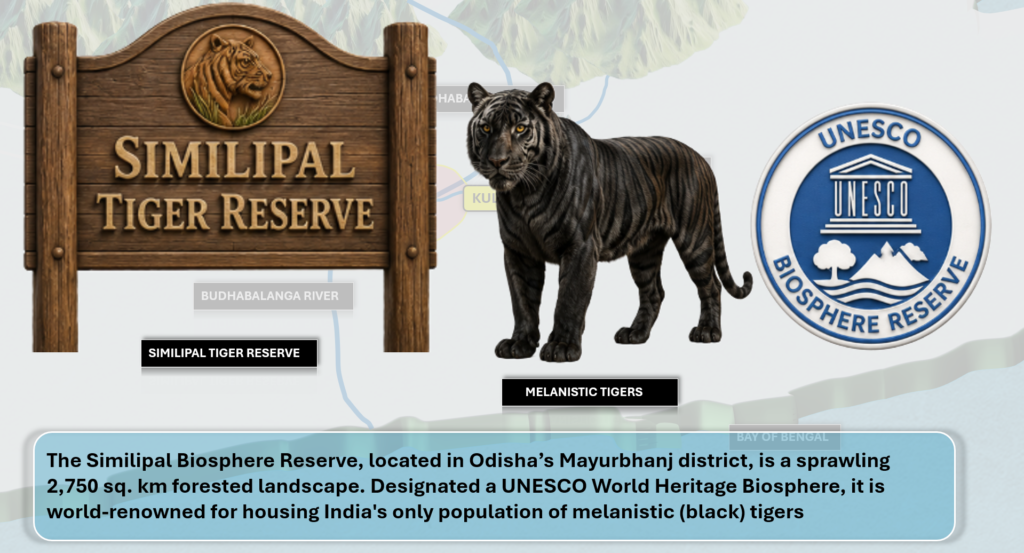
Kuliana is an important Lower Paleolithic archaeological site located in Kuliana Village, Mayurbhanj district, Odisha. The Mayurbhanj district is renowned for the Similipal Biosphere Reserve and Tiger Reserve, its rich prehistoric archaeological heritage, tribal communities such as the Santhal, Ho, and Bhumij, and abundant iron ore deposits. The site lies in the Burhabalang (Budhabalanga) River valley, with the Jarali and Ghunturu streams flowing nearby.
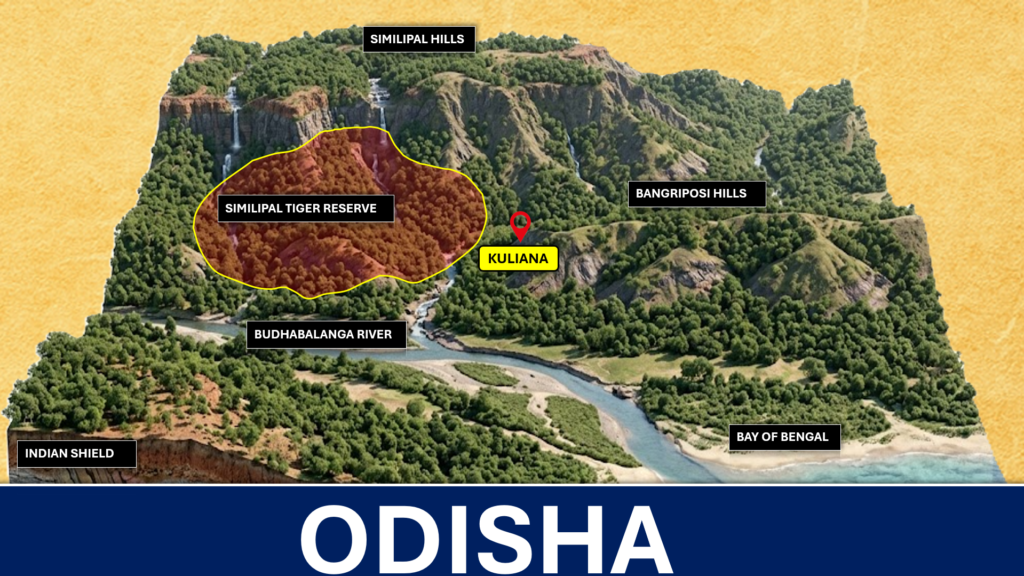
It is surrounded by the Similipal Hills of the Eastern Ghats and the Bangriposi Hills, providing a favourable landscape for early human occupation.
Kuliana preserves evidence of a continuous prehistoric cultural sequence, with habitation extending from the Lower Paleolithic through the Middle Paleolithic, Upper Paleolithic, and Mesolithic periods. The earliest occupation dates to approximately 700,000–150,000 years Before Present (Lower to Middle Pleistocene) and is associated with the Lower Pleistocene boulder conglomerates of the Burhabalang Valley.
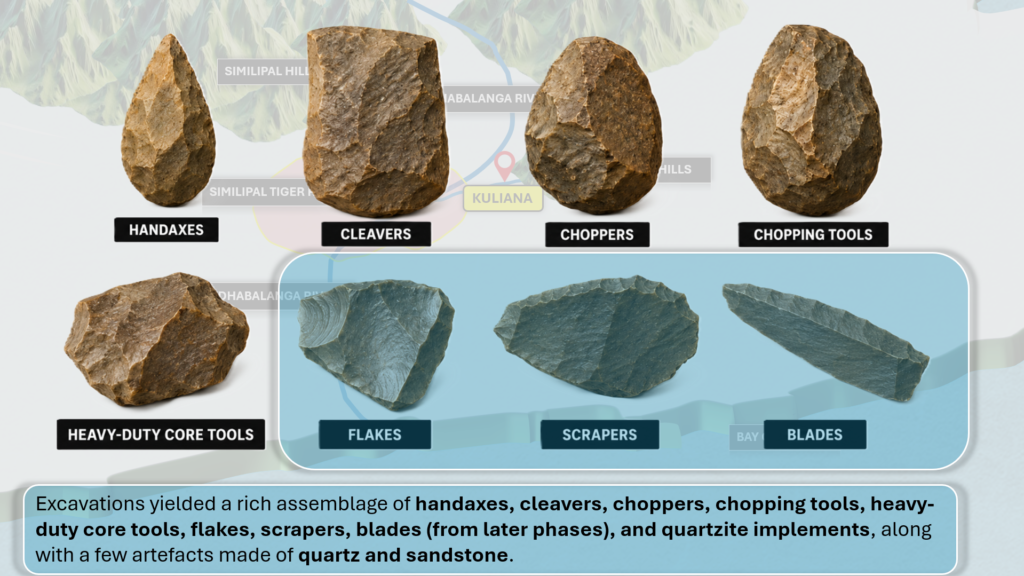
The site was first explored by Paramananda Acharya and E. C. Worman during the late 1930s, while systematic excavations were carried out by Nirmal Kumar Bose and D. Sen of the University of Calcutta in 1948. Excavations yielded a rich assemblage of handaxes, cleavers, choppers, chopping tools, heavy-duty core tools, flakes, scrapers, blades (from later phases), and quartzite implements, along with a few artefacts made of quartz and sandstone.
Although no human fossils have been discovered at the site, the Lower Paleolithic occupation is generally attributed to Homo erectus, while the later prehistoric phases were likely inhabited by archaic Homo sapiens and subsequently anatomically modern Homo sapiens.
Kuliana occupies a distinguished place in Indian prehistory as the first excavated Lower Paleolithic site in India and one of the country’s earliest scientifically excavated prehistoric sites. It played a pivotal role in establishing the antiquity of the Indian Lower Paleolithic and remains a key site for understanding the prehistoric cultural sequence of eastern India, particularly the Burhabalang Valley.