Why are Lower Paleolithic sites scarce in the Indo-Gangetic Plains?
By on
Why are Lower Paleolithic sites scarce in the Indo-Gangetic Plains?
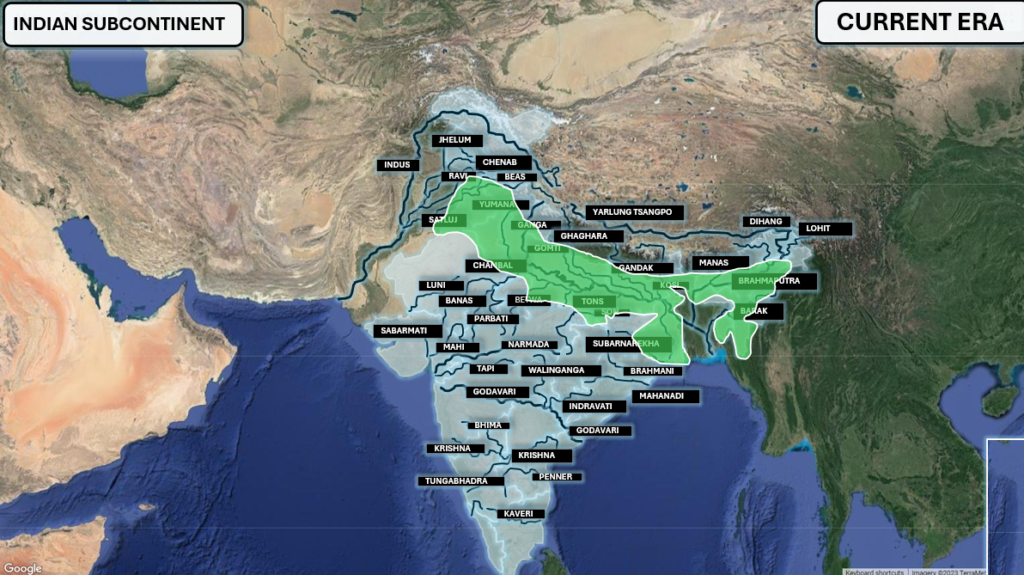
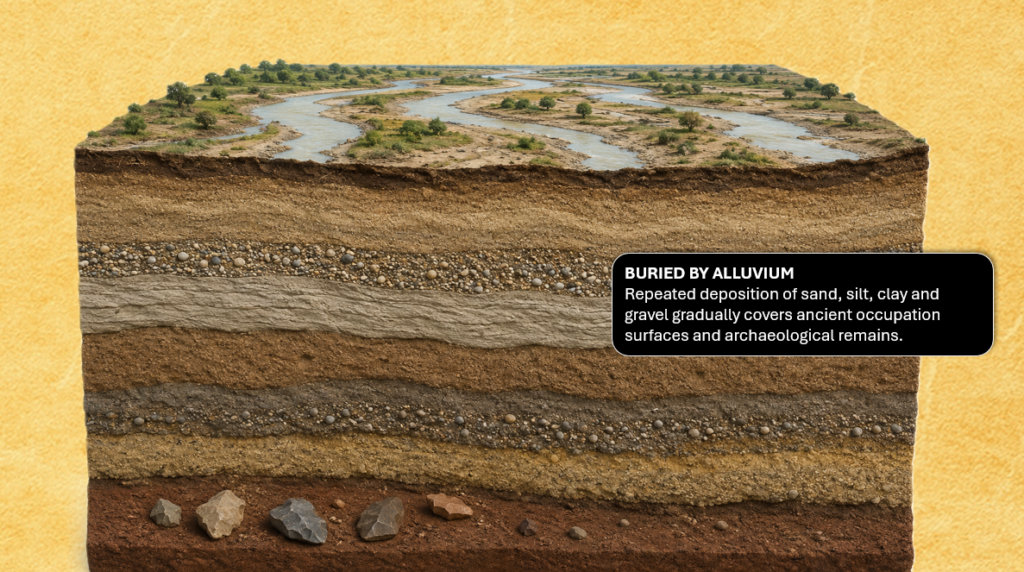
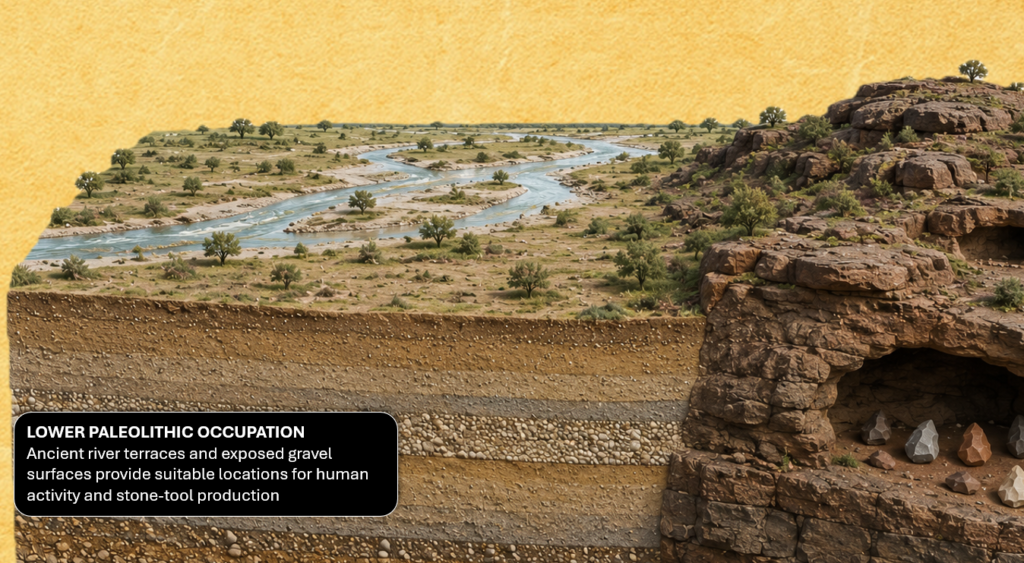
Deep alluvial deposition The Ganga–Yamuna system has repeatedly deposited huge quantities of sand, silt, clay and gravel. Older occupation surfaces and stone tools may therefore lie several metres below the modern surface, making them difficult to locate.
High sediment mobility Rivers frequently migrate, erode their banks and redeposit sediments. Even when tools were originally present, they may have been transported, scattered or buried rather than remaining at their original occupation site.
Poor surface visibility In much of the plains, the ground is covered by thick agricultural soils, recent alluvium and vegetation. Unlike rocky uplands, there are few exposed surfaces where archaeologists can easily identify stone artefacts.
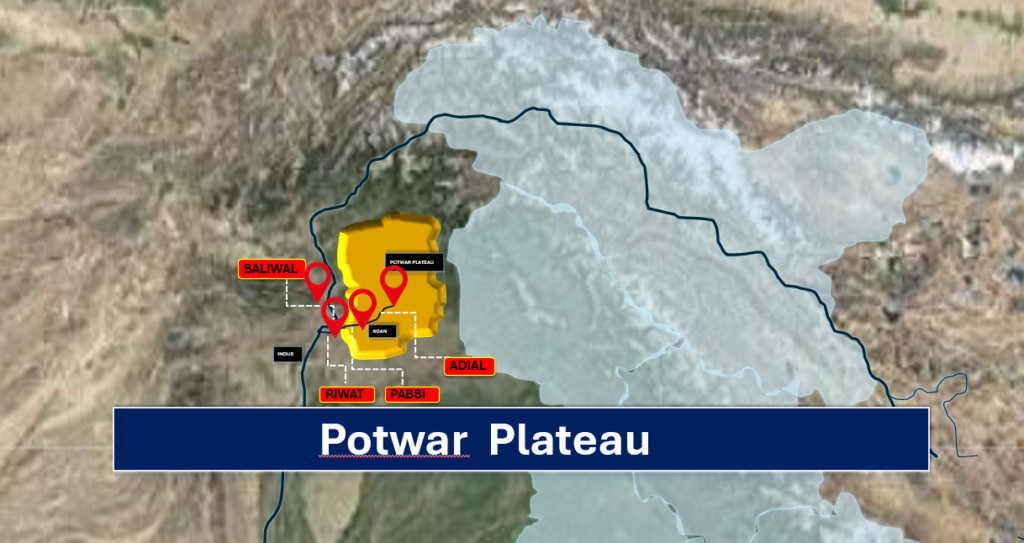
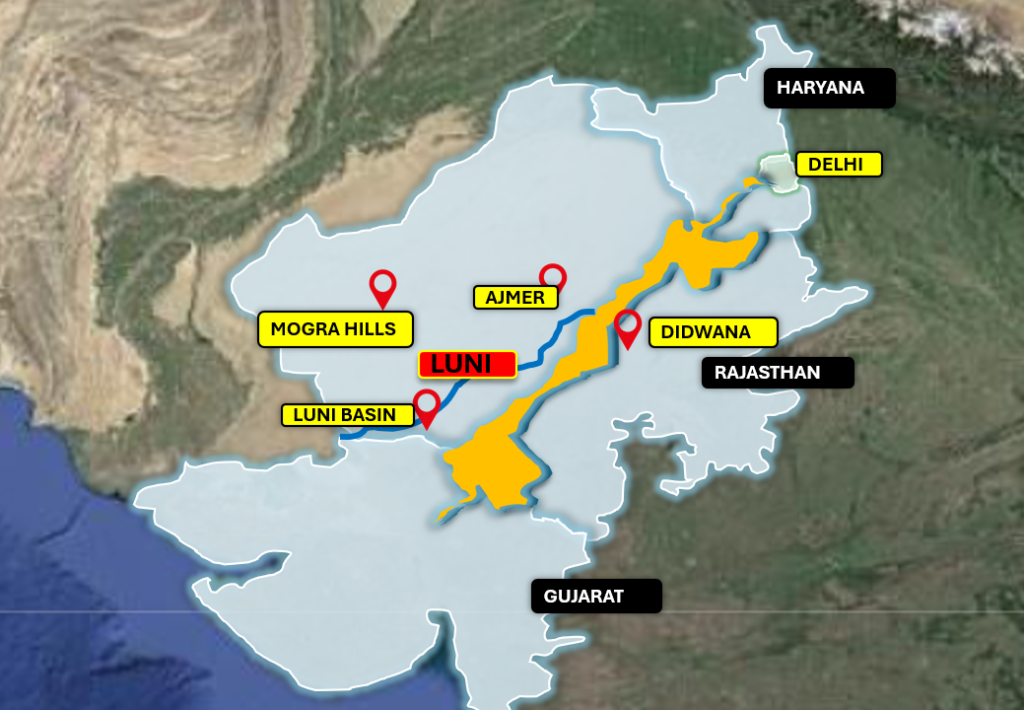
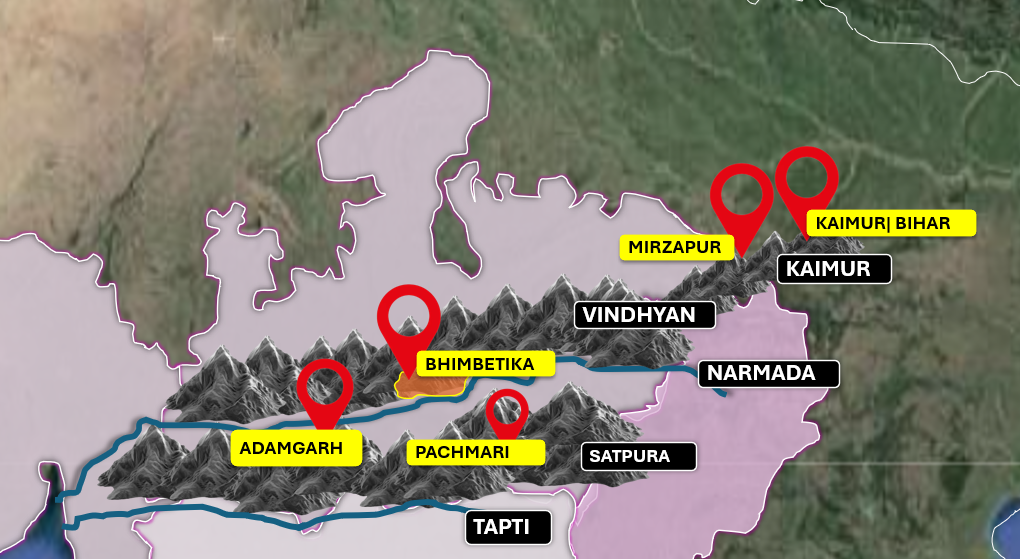
Fewer suitable raw-material exposures Lower Paleolithic populations depended heavily on locally available stone such as quartzite, quartz and other knappable rocks. The extensive alluvial plains have fewer naturally exposed bedrock sources compared with areas such as the Deccan Plateau, Vindhyas and peninsular river valleys.
Limited caves and rock shelters The plains lack the extensive caves and rock shelters found in limestone and sandstone landscapes elsewhere in India. Such protected environments can preserve archaeological deposits for long periods.
Landscape transformation The Ganga–Yamuna plains have witnessed repeated occupation, agriculture, settlement and river modification over thousands of years. Later sediments and human activity have disturbed or buried earlier archaeological horizons.
Sampling and research bias Another important factor is archaeological visibility. A region with few exposed surfaces is inherently harder to survey. Therefore, the apparent scarcity of Lower Paleolithic sites may partly reflect under-discovery rather than genuine absence.

Be First to Comment