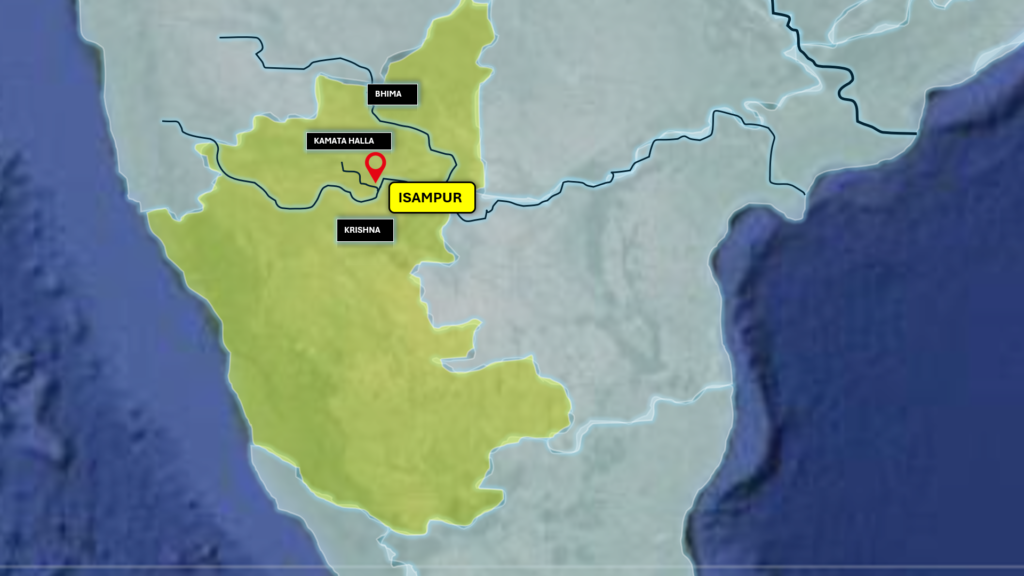
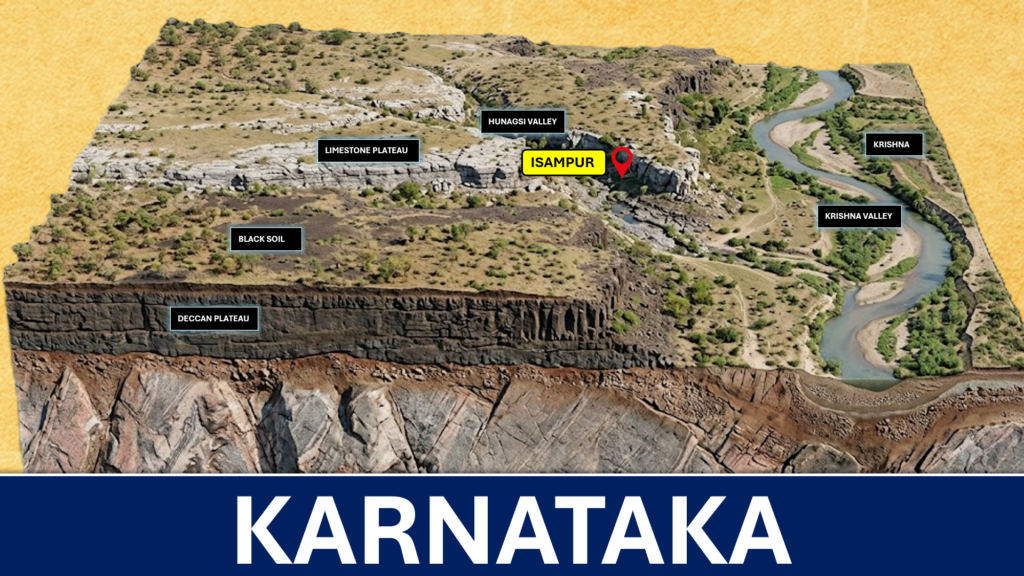
Isampur is an important Lower Paleolithic (Early Acheulian) archaeological site located in Isampur village, Kalaburagi (formerly Gulbarga) district of Karnataka. The district is especially known for the Hunsgi–Baichbal Valley prehistoric sites, its extensive limestone plateau, and its location within the Krishna River basin, which provided favourable conditions for early human activity.
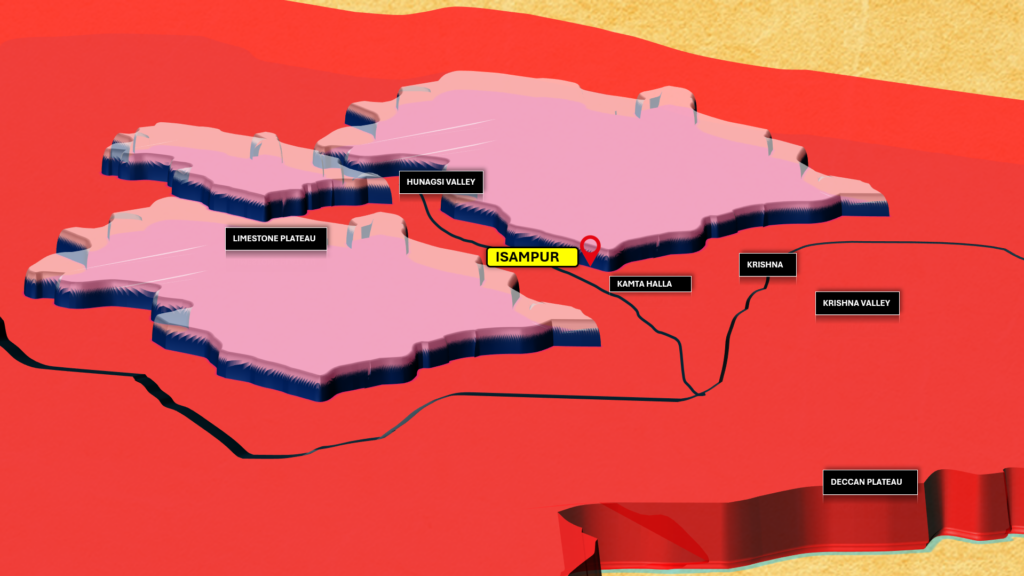
The site lies near Kamta Halla, a tributary of the Krishna basin, and about 15 km from the Krishna River. Geographically, it is situated on the Hunsgi–Baichbal limestone uplands of the Deccan Plateau, and no major mountain range occurs immediately adjacent to the site. There is also no wildlife sanctuary in the immediate vicinity.
Archaeological evidence indicates that Isampur was occupied roughly 1.5 to 1.0 million years before present, with traces of later Middle Paleolithic activity as well. It belongs specifically to the Lower Paleolithic (Early Acheulian) phase.
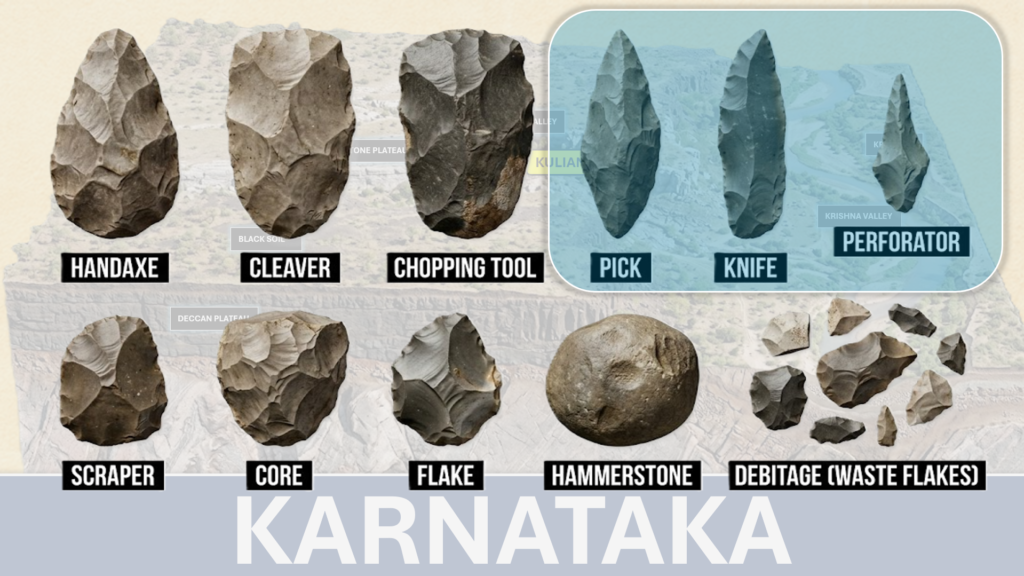
Excavations yielded a rich assemblage of Acheulian artefacts, including handaxes, cleavers, chopping tools, picks, knives, perforators, scrapers, cores, flakes, hammerstones, and debitage (waste flakes).
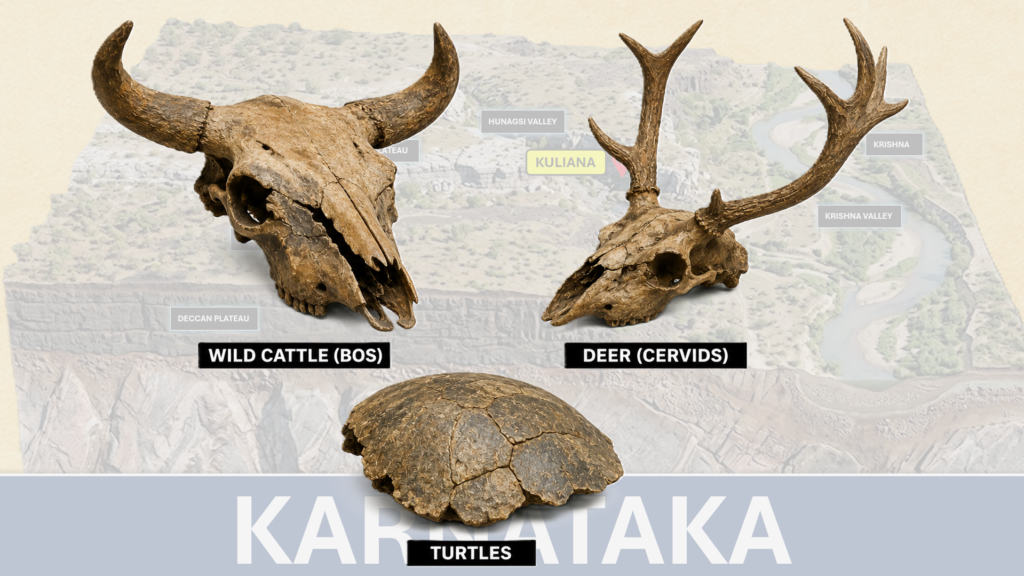
These tools were produced by Homo erectus or early Acheulian hominins, and associated faunal remains include wild cattle (Bos), deer (cervids), and turtles.
Isampur is especially significant because it is India’s first excavated Acheulian quarry-cum-workshop discovered in an undisturbed context. More than 15,000 artefacts have revealed the entire sequence of Acheulian tool manufacture, from raw material procurement to finished tools. It is also regarded as one of the oldest well-dated Lower Paleolithic sites in South Asia, with an estimated age of about 1.2–1.5 million years.

Be First to Comment